Small gardens can be brilliant. In fact, some of my favourite UK gardens have been the tiniest ones: narrow terraces, little courtyards, postage-stamp lawns and compact patios that looked ordinary at first, but became beautiful once every inch was used properly.
If you are just getting started, the good news is this: you do not need a huge plot, expensive landscaping or expert-level plant knowledge to create a garden you enjoy. Many of the best Small Garden Ideas are actually simpler, cheaper and easier to manage than large garden projects. That is one reason containers, vertical growing, and compact planting are so popular in Britain, especially where outdoor space is limited. The RHS notes that containers are especially useful when soil space is limited and are great for beginners growing smaller amounts of herbs or veg.
Below is a practical, beginner-friendly guide to help you transform a small UK garden into a space that feels bigger, more useful and more inviting.
Step-by-Step Guide to Planning a Small Garden
Before jumping into the 10 ideas, start with these simple steps:
1. Look at how you use the space
Ask yourself:
- Do you want more flowers, more seating, or a little bit of both?
- Is the garden mainly sunny, shady or mixed?
- Do you want low-maintenance planting?
- Are you hoping to grow herbs, veg or pollinator-friendly plants?
2. Measure the space
Even a rough measurement helps. Small gardens work best when the layout is deliberate. A few well-placed pots or one raised bed will look better than squeezing in too much.
3. Check light and shelter
UK gardens vary hugely. A small south-facing patio can be warm and dry, while a courtyard in shade may stay damp and cool for much of the year. Pots near walls can also create warmer microclimates, but tender plants in exposed spaces may still need frost protection in colder months.
4. Choose a simple style
For beginners, I usually suggest one of these:
- Cosy cottage look with flowers and soft planting
- Modern patio garden with neat pots and clean lines
- Edible small garden with herbs, salads and compact veg
- Wildlife-friendly small garden with pollinator plants and less mowing
5. Start with one strong feature
In a compact garden, one clear idea often works best:
- a seating corner
- a raised bed
- a vertical herb wall
- a cluster of large containers
- a no-fuss gravel or paved area with planting around it
1. Use Containers to Add Colour Without Taking Up Much Space
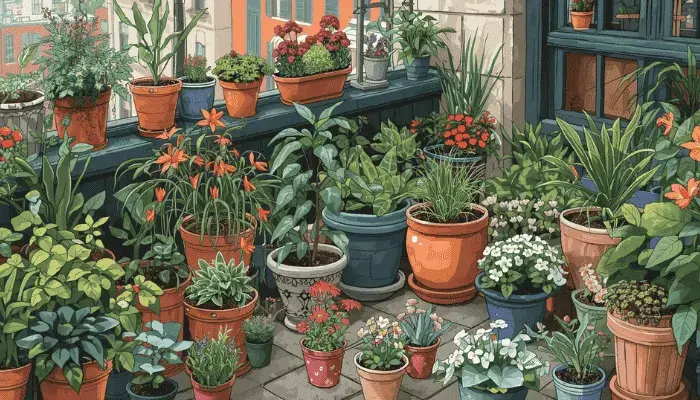
One of the best Small Garden Ideas for beginners is container gardening. It is flexible, forgiving and perfect for patios, balconies, yards and tiny gardens. The RHS recommends containers for limited space and highlights how easy they are to move around compared with plants in the ground.
For UK beginners, containers are especially useful because:
- You can control the compost
- You can move plants into better sun or shelter
- You can start small and add more over time
- They work well for herbs, bedding plants, bulbs and even small shrubs
Good container choices for UK gardens
- Lavender
- Heuchera
- Geraniums
- Salvia
- Busy Lizzie for shade
- Rosemary
- Thyme
- Salad leaves
- Dwarf patio tomatoes
Experience tip
Use fewer, bigger pots rather than lots of tiny ones. Bigger pots dry out more slowly and usually look tidier in a small garden. Also, make sure every pot has drainage holes. The RHS advises that container plants need careful watering and good drainage to grow well.
2. Grow Upwards with Vertical Planting
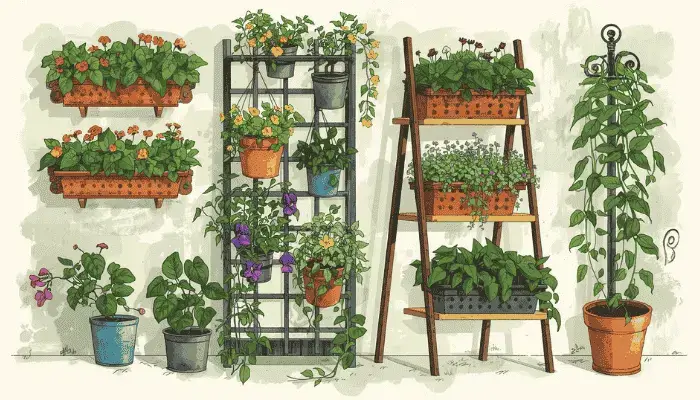
When floor space is limited, think vertically. The RHS specifically recommends vertical gardening as a practical way to grow in small spaces, especially in urban gardens where traditional horizontal growing is not possible.
This is one of the smartest Small Garden Ideas because it adds greenery without crowding the ground.
Easy vertical ideas
- Wall-mounted planters
- Trellis panels for climbers
- Hanging baskets
- Shelves for pots
- A simple ladder shelf for herbs
- Obelisks in pots for sweet peas or climbing beans
Good vertical plants for UK beginners
- Sweet peas
- Clematis
- Jasmine
- Climbing French beans
- Nasturtiums
- Strawberries in hanging containers
Experience tip
Do not overload a small wall with too many planters. Leave a little breathing space so the display looks stylish rather than cluttered.
3. Replace a Tiny Lawn with a Better Feature
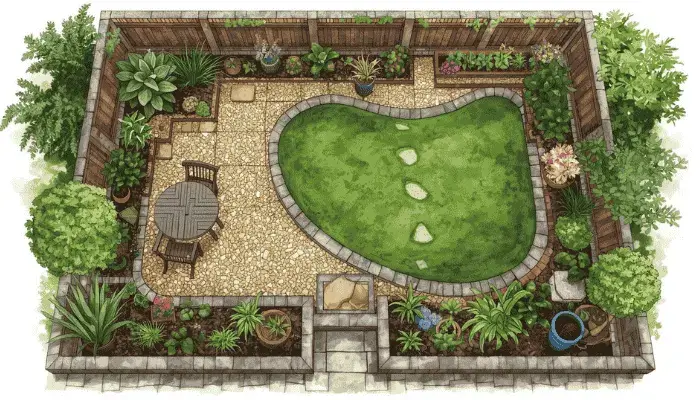
In many small UK gardens, the lawn takes up valuable room but gives very little back. The RHS points out that, in a small garden, a paved, gravelled or decked area is less work than keeping a small patch of grass looking good.
That does not mean lawns are bad. But if your grass is always patchy, shaded or awkward to mow, replacing it may be the better choice.
Alternatives to a tiny lawn
- Gravel with pots
- A small patio for seating
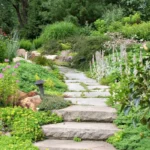
- Stepping stones with planting between
- Raised beds around a central sitting area
- Decorative bark or mulch paths
- Wildlife-friendly planting with less mowing
This is one of the most practical Small Garden Ideas if you want a low-maintenance garden.
4. Add a Small Raised Bed for Structure
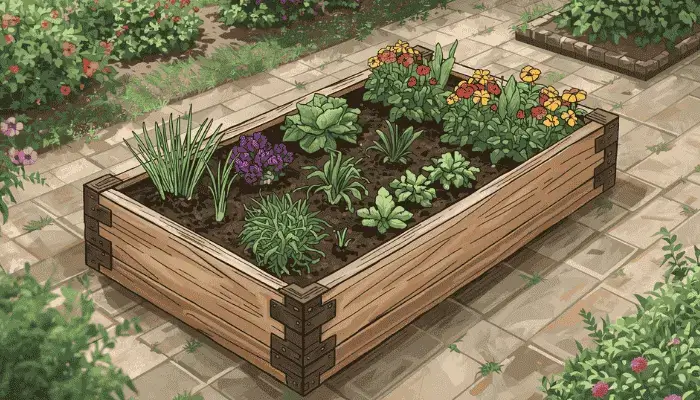
Raised beds are not just for big vegetable gardens. In a small garden, one raised bed can bring order, better drainage and easier access. BBC Gardeners‘ World highlights that raised beds can improve drainage and are a useful way to garden well in a controlled space.
Why beginners like raised beds
- Clear growing area
- Less bending
- Easier weed control
- Neater layout
- Good for salads, herbs and flowers
What to grow in a small raised bed
- Lettuce
- Rocket
- Spring onions
- Parsley
- Chard
- Marigolds
- Nasturtiums
Experience tip
Start with just one bed. A small, well-planted, easy-to-maintain raised bed is better than several that become overwhelming.
5. Create a Seating Spot, Even if It Is Tiny
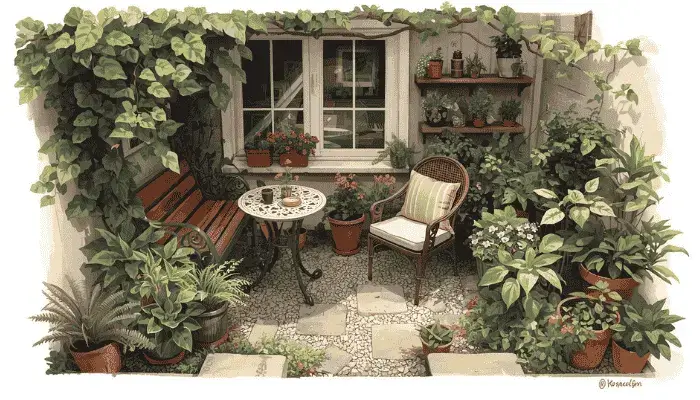
A small garden should still feel like a place to enjoy, not just a place to maintain. Even a narrow bistro set, a bench tucked into a corner, or one comfortable chair among pots can change the whole feel of the space.
This idea works because it gives the garden a purpose. Instead of thinking, “It’s too small,” you start thinking, “This is my coffee corner,” or, “This is where I sit in the evening.”
Simple seating ideas
- Foldable bistro table and chairs
- Slim bench against a fence
- Storage bench with cushions
- Gravel or paving area with potted plants around it
Experience tip
Leave enough room to move comfortably. In small spaces, overcrowding is one of the fastest ways to make a garden feel even smaller.
6. Choose Plants That Earn Their Space
In a compact garden, every plant should serve a useful purpose. The RHS encourages making every space count in small gardens, and that is exactly the right mindset.
Look for plants that offer:
- long flowering periods
- evergreen structure
- scent
- pollinator value
- edible use
- attractive foliage
Great compact UK-friendly plants
- Lavender
- Salvia
- Hebe
- Heuchera
- Hardy geranium
- Skimmia
- Ferns for shade
- Box alternatives, such as compact evergreen shrubs
- Herbs like chives, sage and thyme
For wildlife
The RHS recommends pollinator-friendly plants and advises avoiding pesticides and providing flowers across the seasons to support bees and other insects.
A small garden can still be excellent for wildlife if you include nectar-rich flowers and avoid over-tidying everything.
7. Grow Food in Small Spaces
Many beginners assume they need a full allotment-style setup to grow food. Still, the RHS specifically shares ways to grow veg even when you are short on space.
This is one of the most rewarding Small Garden Ideas, because edible gardening makes your space beautiful and useful.
Easiest crops for small UK gardens
- Mint in pots
- Basil in summer containers
- Parsley
- Chives
- Cut-and-come-again lettuce
- Radishes
- Spring onions
- Patio tomatoes
- Strawberries
Experience tip
Grow what you actually eat. Beginners often get excited by unusual crops, but herbs, salad leaves, and strawberries usually lead to faster success and greater confidence.
8. Use Light Colours and Mirrors Carefully
Design tricks matter in small gardens. Pale fencing, light paving and reflective surfaces can make a compact plot feel more open. A well-placed outdoor mirror can create a sense of extra depth, especially in a courtyard or narrow side return.
Best uses
- Paint fences in soft grey, sage or warm cream
- Use pale gravel or paving to brighten a shady corner
- Place a mirror where it reflects plants, not clutter
- Repeat colours in pots and furniture for a calmer look
Experience tip
Use mirrors carefully in sunny spots and avoid reflecting harsh glare. In very windy or exposed gardens, secure them properly.
9. Keep It Low Maintenance from the Start
Many beginners want an attractive garden, but they also want it to be manageable. That is sensible. According to the RHS and BBC Gardeners’ World, low-maintenance gardens often rely on reducing lawn areas, choosing easier plants, and simplifying watering and upkeep.
Easy low-maintenance ideas
- Mulch bare soil to suppress weeds
- Choose hardy perennials over fussy annuals
- Group pots together for easier watering
- Use larger containers
- Install a simple water butt if possible
- Avoid buying too many thirsty plants for full sun
With warmer, drier periods becoming more common in parts of the UK, water-wise planning is increasingly useful. BBC Gardeners’ World recommends saving rainwater, mulching and choosing drought-tolerant planting where appropriate.
10. Use Peat-Free Compost and Water Properly
This may sound less exciting than furniture or flowers, but it makes a huge difference. The RHS advises that peat-free composts are now widely available and are the more sustainable choice for UK gardeners. It also notes that different peat-free mixes suit different tasks, such as seed sowing, containers and long-term planting.
Beginner’s rule of thumb
- Use peat-free multi-purpose compost for most pots
- Use seed compost for sowing seeds
- Refresh old compost in containers regularly
- Water thoroughly, then let the top layer dry slightly before watering again
The RHS also stresses that container plants need consistent watering, especially in warmer weather, and that checking compost moisture is better than watering on guesswork alone.
Practical Tips From Experience
These are the things I find matter most in real small gardens:
Start small
Do not redesign everything in one weekend. Begin with one area, such as:
- the patio by the back door
- one raised bed
- three feature pots
- a herb corner
Repeat plants for a calmer look.
A small space can look busy very quickly. Repeating the same plant or pot style helps the whole garden feel more polished.
Place scented plants near entrances or seating areas.
Lavender, thyme and jasmine are far more enjoyable when planted where you will notice them.
Watch for microclimates
A south-facing wall may be warm enough for tender plants in summer, while a shaded fence line can stay cold and damp. Small gardens often have big differences within just a few feet. Frost and winter damage risks also vary with exposure and shelter.
Keep some space.
Not every inch needs filling. A little open paving or gravel helps the garden feel bigger.
Common Beginner Mistakes
Here are the most common mistakes I see with Small Garden Ideas:
1. Buying too many tiny pots
These dry out quickly, making the garden feel cluttered.
2. Choosing plants only because they look pretty at the garden centre
Always check final size, light needs and hardiness for UK conditions.
3. Ignoring watering
Container gardens are fantastic, but pots dry faster than the ground soil. The RHS repeatedly highlights careful watering as essential for container success.
4. Keeping a lawn that does not work
If your tiny lawn is mostly moss and mud, replacing it may save time and improve the garden.
5. Overcomplicating the design
Small gardens look best when the idea is simple and repeated well.
6. Forgetting winter
Potted plants are more exposed to frost than plants in the ground, so some will need protection or moving to shelter during cold spells.
Tools or Materials Needed
You do not need loads of equipment to start. For most beginner small gardens, these basics are enough:
- Hand trowel
- Hand fork
- Watering can
- Good gloves
- Secateurs
- Peat-free compost
- Pots with drainage holes
- Raised bed materials or timber, if using one
- Trellis or supports for climbers
- Mulch or gravel
- Plant labels
- A small storage box or bench for tidy organisation
Conclusion
The best Small Garden Ideas are not about squeezing in more stuff. They are about making the space work harder, feel calmer and give you more enjoyment.
Start with one simple improvement: a few bigger pots, a vertical planter, one raised bed or a tiny seating area. Once you see that first bit working, the rest becomes much easier.
Even the smallest UK garden can become a beautiful, useful and confidence-building space. And as a beginner, that is exactly where you want to start: simple, practical and encouraging.
FAQ: Small Garden Ideas for Beginners
What are the best plants for a small UK garden?
For beginners, good choices include lavender, heuchera, salvia, rosemary, thyme, hardy geraniums and compact evergreen shrubs. Pick plants that suit your light levels and soil or container conditions. Pollinator-friendly choices are especially useful in small gardens.
Can I have a nice garden without a lawn?
Yes, absolutely. In many small gardens, replacing a difficult, small lawn with paving, gravel, pots, or raised beds makes the space easier to maintain and often more attractive.
Are raised beds worth it in a small garden?
Yes, if used sensibly. One small raised bed can improve drainage, define the layout and make growing salads, herbs or flowers much easier.
How do I make a small garden look bigger?
Use a simple layout, repeat colours and plants, grow vertically, keep some open floor space and avoid too much clutter. Light colours and a well-placed mirror can also help.
What is the easiest way to start a small garden as a beginner?
Start with containers. They are flexible, beginner-friendly and ideal for small UK gardens. Add a few reliable plants, learn how the space behaves through the seasons, and build from there.