Starting your first garden is exciting. Whether you’re growing vegetables, planting flowers, or improving your outdoor space, having the right garden tools makes everything easier.
Many beginner gardeners think they need lots of expensive garden equipment to get started. In reality, you only need a small collection of reliable garden instruments that help you plant, dig, prune, and maintain your garden.
Over the years, experienced gardeners learn that good tools save time, reduce effort, and make gardening far more enjoyable.
In this beginner-friendly guide, we’ll explore 10 essential garden tools, explain what they do, and share practical tips to help you choose the best tools for your garden.
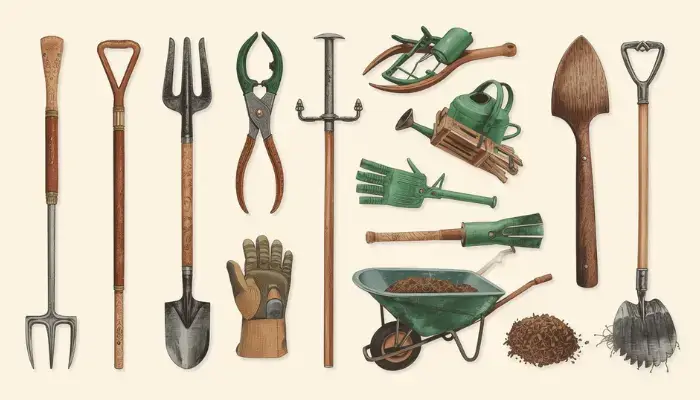
1. Hand Trowel
A hand trowel is one of the most useful garden tools you can own.
It’s a small handheld shovel used for digging small holes, planting seedlings, and moving soil.
What it’s used for
- Planting flowers and vegetables
- Digging small holes
- Transplanting plants
- Removing weeds
Why beginners need it
Most gardening tasks start with planting. A good trowel makes this simple and precise.
Buying tip
Look for:
- Stainless steel blade
- Comfortable grip
- Strong one-piece construction
A cheap trowel often bends or breaks quickly.
2. Garden Fork
A garden fork is one of the most important pieces of garden equipment for preparing soil.
Unlike a spade, the fork has strong metal prongs that break up compacted soil.
What it’s used for
- Loosening heavy soil
- Turning compost
- Aerating garden beds
- Harvesting root vegetables
Why beginners need it
UK soil can often be clay-heavy. A fork helps improve soil structure without damaging it.
3. Spade
A spade is a classic garden instrument used for digging and shaping garden beds.
It has a flat blade, making it ideal for cutting through soil and edging lawns.
What it’s used for
- Digging planting holes
- Creating new beds
- Cutting lawn edges
- Moving soil
Beginner tip
Choose a lightweight spade if you’re new to gardening. Heavy tools can quickly become tiring.
4. Secateurs (Pruning Shears)
Secateurs are essential garden tools for cutting stems, trimming plants, and maintaining healthy growth.
What they’re used for
- Pruning roses
- Cutting dead branches
- Harvesting vegetables
- Shaping plants
Why beginners need them
Regular pruning encourages plants to grow stronger and produce more flowers or fruit.
Buying tip
Look for bypass secateurs rather than anvil types. They make cleaner cuts and are better for living plants.
5. Garden Rake
A garden rake helps keep your garden tidy and prepares the soil for planting.
What it’s used for
- Levelling soil
- Removing stones
- Clearing leaves
- Spreading compost
Why beginners need it
After digging or planting, the soil often becomes uneven. A rake helps create smooth planting beds.
6. Watering Can
Plants need consistent watering, especially during dry UK summers.
A watering can is one of the most basic but essential garden instruments.
What it’s used for
- Watering plants
- Feeding liquid fertiliser
- Caring for seedlings
Beginner tip
Choose a watering can with a detachable rose head. This provides gentle watering for delicate plants.
7. Garden Hoe
A garden hoe is a surprisingly powerful tool for weed control.
What it’s used for
- Removing weeds
- Breaking soil crust
- Creating planting rows
- Cultivating soil
Why beginners need it
Weeds grow quickly in UK gardens. A hoe makes removing them much easier.
Regularly using a hoe can save hours of weeding later.
8. Garden Gloves
Gardening without gloves can quickly lead to cuts, blisters, and dirty hands.
A good pair of garden gloves protects your hands during gardening tasks.
What they’re used for
- Handling thorny plants
- Pulling weeds
- Digging soil
- Moving compost
Buying tip
Look for:
- Breathable material
- Strong fingertips
- Flexible grip
Comfortable gloves encourage you to spend more time gardening.
9. Wheelbarrow
A wheelbarrow is one of the most useful pieces of garden equipment for moving materials around your garden.
What it’s used for
- Moving soil
- Transporting compost
- Carrying plants
- Clearing garden waste
Why beginners need it
Even small gardens generate a lot of waste and materials. A wheelbarrow saves your back and reduces effort.
10. Garden Kneeler or Kneeling Pad
Gardening often involves kneeling for long periods.
A kneeling pad or garden kneeler protects your knees and makes gardening more comfortable.
What it’s used for
- Planting flowers
- Weeding garden beds
- Working with seedlings
Why beginners need it
Comfortable gardening means you’ll enjoy spending more time in your garden.
How to Choose Good Quality Garden Tools
Not all garden tools are created equal. Choosing high-quality tools makes gardening easier and saves money over time.
Here are a few simple buying tips:
Look for strong materials.
Good garden equipment should have:
- Stainless steel heads
- Hardwood or fibreglass handles
- Rust-resistant materials
Choose comfortable handles
Tools should feel comfortable in your hand. Test them before buying.
Avoid very cheap tools.
Budget tools often bend, rust, or break quickly.
Investing in a few high-quality garden tools will last for many years.
Practical Tips from Gardening Experience
After years of gardening, many gardeners learn a few helpful tricks.
Here are some simple tips beginners often appreciate:
Start with fewer tools.
You don’t need a full shed of tools. Begin with the essentials and add more as your garden grows.
Clean tools after use
Mud and moisture cause rust. A quick rinse and dry keeps tools in good condition.
Keep tools in one place.
A small garden shed or storage box keeps tools organised and easy to find.
Buy tools gradually
You’ll discover which garden tools you use most often as you gain experience.
Common Mistakes Beginners Make with Garden Tools
Many new gardeners make small mistakes when using their garden equipment.
Here are some common ones to avoid:
Buying too many tools
Beginners often purchase tools they rarely use.
Stick to the essential garden instruments first.
Choosing poor-quality tools
Cheap tools break easily, making gardening frustrating.
Not cleaning tools
Leaving tools wet can cause rust and shorten their lifespan.
Using the wrong tool
For example:
- Using a spade instead of a fork in heavy soil
- Using dull secateurs that damage plants
Learning the right tool for each job improves results.
Basic Garden Tool Maintenance Tips
Taking care of your garden tools helps them last for years.
Clean after every use
Remove soil with a brush or cloth.
Dry tools properly
Moisture causes rust.
Sharpen cutting tools
Secateurs and shears should be sharpened occasionally.
Oil metal parts
A small amount of oil prevents rust and keeps tools moving smoothly.
Store tools properly
Keep garden equipment in a dry shed or storage box.
Conclusion
Starting your gardening journey doesn’t require a huge collection of garden tools.
With just a few reliable garden instruments and garden equipment, you can plant flowers, grow vegetables, and maintain a healthy garden.
The most important thing is to start small, learn as you go, and enjoy the process.
Gardening is one of the most rewarding hobbies — and with the right tools in hand, you’ll find it easier, more productive, and far more enjoyable.
Happy gardening! 🌱
Frequently Asked Questions
What are the most important garden tools for beginners?
The most useful starter garden tools include:
Hand trowel
Spade
Garden fork
Secateurs
Watering can
These tools handle most beginner gardening tasks.
Do I need expensive garden equipment?
Not necessarily. Focus on durable, good-quality tools, rather than expensive brands.
A few well-made tools are better than many cheap ones.
How many garden tools should beginners buy?
Start with 5–7 essential garden instruments. You can add more tools as your gardening skills develop.
How long do garden tools last?
Good garden equipment can last for many years, or even decades, with proper care and maintenance.
Where should I store my garden tools?
Store tools in:
A garden shed
A dry garage
A weatherproof storage box
Keeping tools dry prevents rust.