
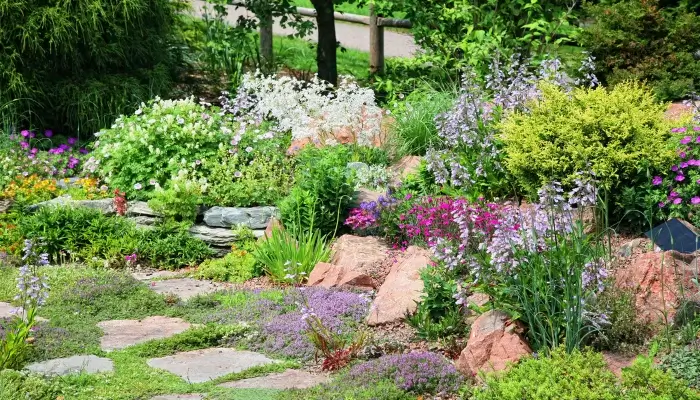
Creating a beautiful garden doesn’t have to mean constant watering, endless maintenance, or fighting against the weather—especially in the UK, where rain, shade, and fluctuating temperatures can be both a challenge and an opportunity. That’s where sustainable rock gardens truly shine. By combining natural stone with carefully chosen plants, you can design a space that not only looks stunning year-round but also harmonizes with the environment.
In this guide, we’ll explore 10 sustainable rock garden DIY ideas that are both practical and inspiring. From the timeless charm of an Alpine Rock Garden, perfect for free-draining soil and delicate mountain plants, to a clever Rainwater Rock Garden that turns excess rainfall into a natural feature, each idea is designed with the UK climate in mind. You’ll also discover how a Dry River Bed Feature can help manage drainage while adding visual interest, and how a Coastal-Style Rock Garden can bring a breezy, low-maintenance feel to your space.
If you’re working with limited room, a Vertical Rock Wall Garden offers a smart way to grow upward, while a Shaded Rock Garden makes the most of those tricky low-light areas. For eco-conscious gardeners, a Recycled Material Rock Garden is a brilliant way to reuse materials creatively, while a Wildlife-Friendly Rock Garden supports pollinators and local biodiversity.
You’ll also find ideas for a hardy Succulent Rock Garden suited to cooler climates, as well as a calming Mini Zen Rock Garden that adds a peaceful, minimalist touch. Whether you’re a beginner or looking to refresh your outdoor space, these ideas will help you build a garden that’s not only beautiful but truly sustainable.
1. Alpine Rock Garden
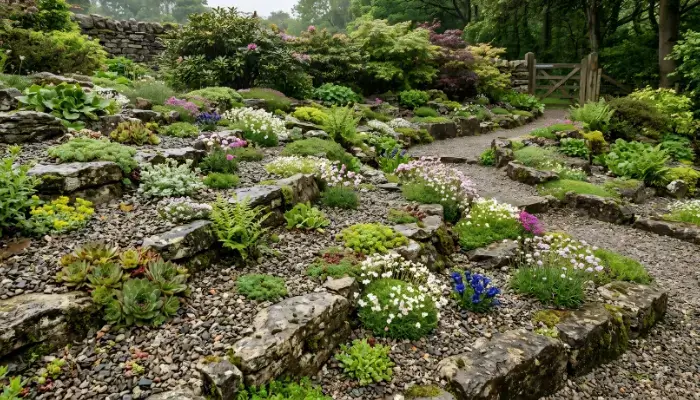
An Alpine Rock Garden is a timeless choice and perfectly suited to UK conditions. By creating a gently sloped bed with rocks and free-draining soil, you mimic the natural habitat of mountain plants while solving one of the UK’s biggest gardening challenges—excess moisture. The excellent drainage helps prevent root rot during heavy rain, keeping plants healthy year-round.
This style works beautifully with hardy alpines like Saxifraga, Sedum, and Sempervivum, which thrive in these conditions and add texture and color.
For best results, top your soil with a layer of gravel mulch. This not only reduces weeds but also helps retain the garden’s structure and further improves drainage. It’s a simple, low-maintenance setup that delivers a natural, elegant look.
2. Rainwater Rock Garden
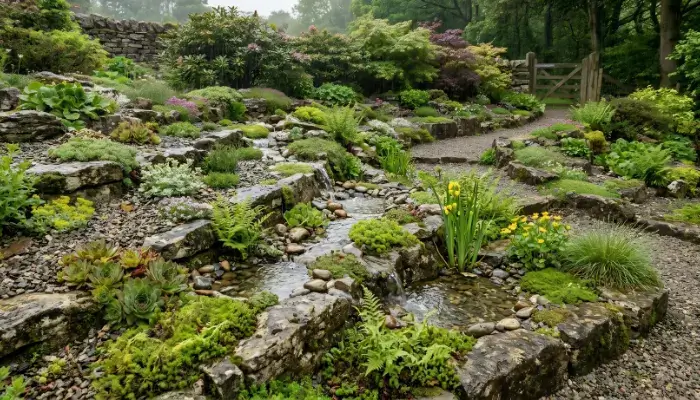
A Rainwater Rock Garden is a smart, sustainable way to turn excess rainwater into a beautiful feature. Instead of fighting soggy soil, you work with it. Simply create a slight dip in your garden and use stones to gently guide water flow through the space. This not only improves drainage but also creates a natural, flowing look.
Plant moisture-loving varieties like Ferns, Moss, and Primula in the lower zones where water naturally collects. These plants will thrive in damp conditions and add lush greenery.
The result is a low-maintenance garden that reduces water runoff and supports local biodiversity—making it both eco-friendly and attractive.
3. Dry River Bed Feature
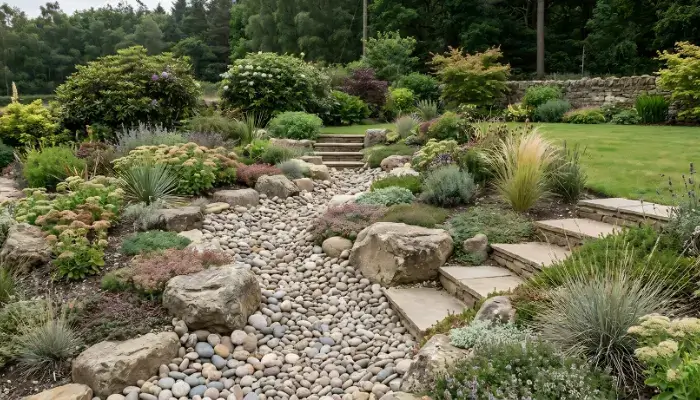
A Dry River Bed Feature is a simple yet striking way to bring both function and beauty into your garden. By arranging stones and pebbles to mimic a natural stream, you create a “river” that looks decorative in dry weather but works hard during heavy rain.
This design helps channel excess water safely through your garden, reducing puddles and preventing soil erosion. It also adds a sense of movement and flow, making even a small space feel more dynamic and natural.
For a realistic look, place larger rocks along the edges to serve as riverbanks, and fill the center with smaller pebbles to create a gentle, flowing effect. It’s an easy DIY project that blends style with smart drainage—perfect for UK gardens.
4. Coastal-Style Rock Garden
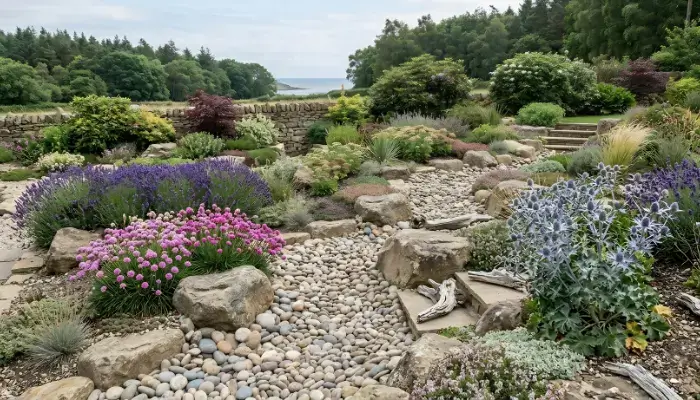
A Coastal-Style Rock Garden brings the relaxed, breezy feel of the UK shoreline right into your outdoor space. Inspired by rugged coastal landscapes, this style uses stones, gravel, and hardy plants to create a natural, windswept look that’s both beautiful and practical.
It’s ideal for UK gardens because it thrives in tough conditions—strong winds, poor soil, and dry spells won’t be a problem. Plus, it requires very little watering once established, making it a low-maintenance and sustainable choice.
Choose resilient plants like Armeria maritima, Lavandula, and Eryngium. Their textures and soft colors add charm while standing up to the elements—perfect for a relaxed, coastal vibe.
5. Succulent Rock Garden
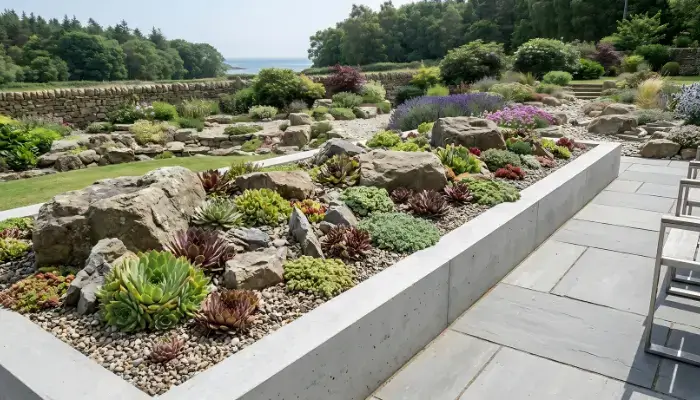
A Succulent Rock Garden can absolutely work in the UK—you just need to choose the right hardy varieties. These tough plants are perfect for adding texture and year-round interest without demanding much care.
Go for reliable options like Sempervivum (houseleeks) and hardy Sedum, which are well adapted to cooler climates and can handle frost surprisingly well.
The golden rule? Excellent drainage is essential. Plant them in a raised bed, rock crevice, or sloped area so water can drain away quickly—this prevents roots from sitting in soggy soil during wet UK winters.
With the right setup, you’ll get a low-maintenance, modern-looking garden that thrives with minimal effort.
6. Vertical Rock Wall Garden
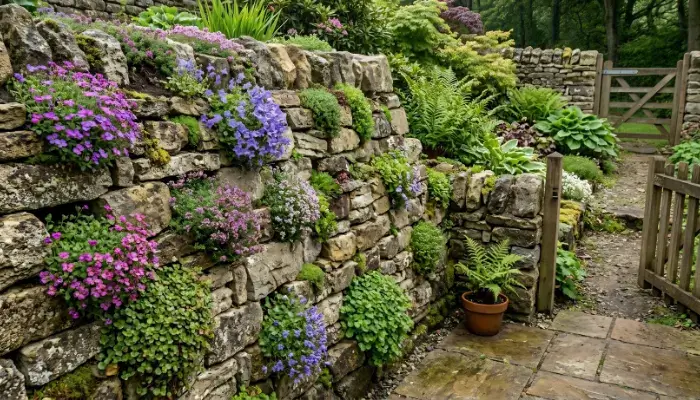
A Vertical Rock Wall Garden is a clever way to add greenery when space is limited. Instead of spreading out, you build upward—perfect for small UK gardens and urban spaces where every inch counts.
Start by stacking stones to create a sturdy low wall, leaving small gaps between them. Fill these gaps with soil to form planting pockets, giving your plants room to grow while keeping a natural, rustic look.
Choose compact, trailing plants like Thymus serpyllum, Aubrieta, and Campanula. They’ll spill gently over the stones, softening the structure and adding color.
It’s a simple DIY project that turns a plain wall into a living feature—beautiful, space-saving, and low maintenance.
7. Wildlife-Friendly Rock Garden
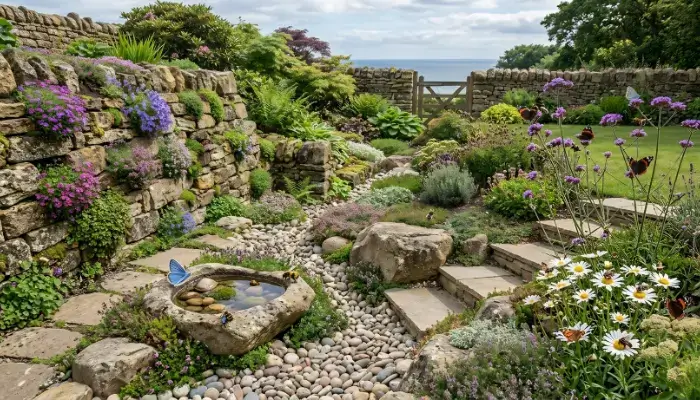
A Wildlife-Friendly Rock Garden is a beautiful way to support nature while creating a lively, low-maintenance space. By combining rocks with pollinator-friendly planting, you can turn your garden into a small haven for bees, butterflies, and other beneficial insects.
Start by adding a shallow water dish for drinking, include native flowering plants, and leave small gaps between stones—these act as shelter for insects. Choose nectar-rich options like Thymus serpyllum, Leucanthemum vulgare, and Verbena to keep pollinators coming back.
This type of rock garden not only looks natural and relaxed but also plays an important role in supporting biodiversity and maintaining a healthy ecosystem.
8. Shaded Rock Garden
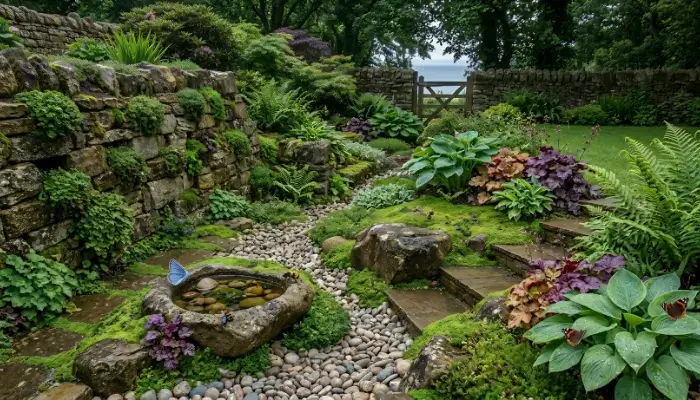
A Shaded Rock Garden is a smart solution for north-facing spaces with limited sunlight—a common situation in many UK gardens. Instead of fighting the shade, this style embraces it, creating a calm, lush retreat with minimal effort.
Use moisture-retaining stones to help keep the soil cool and moist, and add organic mulch to retain moisture while improving soil health. This creates the perfect environment for shade-loving plants to thrive.
Great choices include elegant Ferns, bold-leaved Hosta, and colorful Heuchera. Together, they bring texture, depth, and year-round interest.
It’s a low-maintenance, natural-looking garden that turns a tricky spot into a peaceful green corner.
9. Recycled Material Rock Garden
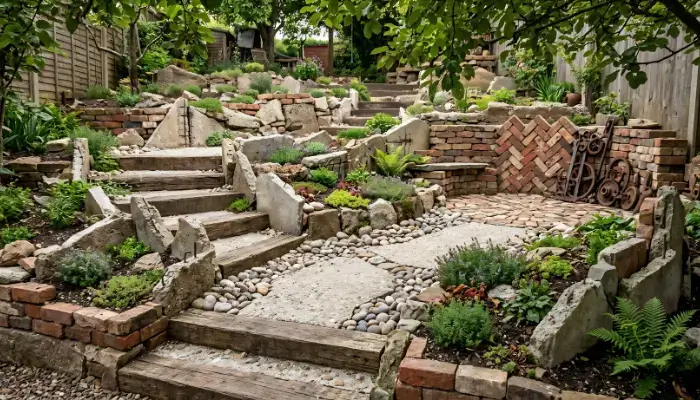
A Recycled Material Rock Garden is a brilliant way to create a beautiful outdoor space while staying kind to the environment. Instead of buying new materials, you reuse what you already have—turning waste into something stylish and functional.
You can use broken concrete (often called urbanite), old bricks, and reclaimed stones to build paths, borders, or raised rock features. Each piece brings its own texture and history, giving your garden a unique, character-filled look that you simply can’t buy off the shelf.
This approach is not only budget-friendly but also highly sustainable, as it reduces landfill waste and promotes eco-conscious gardening. It’s a perfect choice for anyone who wants a creative, low-cost, and environmentally responsible garden design.
10. Mini Zen Rock Garden
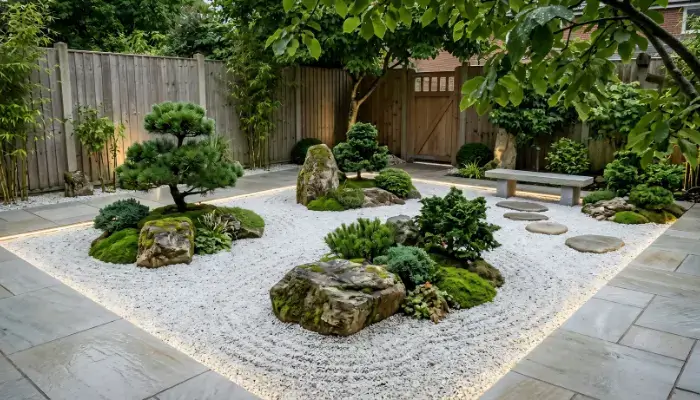
A Mini Zen Rock Garden is a peaceful, minimalist space designed to bring calm and balance into your outdoor area. It’s perfect for modern UK gardens or small patios where you want a clean, low-maintenance feature.
The design is simple but powerful—start with a smooth gravel base to create a soft, neutral backdrop. Then carefully place a few natural stones to form focal points and create a sense of flow and harmony. Keep planting minimal to maintain that uncluttered, meditative feel.
If you’d like a touch of greenery, add slow-growing options like Dwarf conifers or soft Moss for texture.
This style is all about simplicity, balance, and quiet beauty—an ideal space to relax, unwind, and enjoy a moment of calm.
pro tips from a garden designer
Here are some pro tips from a garden designer to help you get the most out of your rock garden ideas in UK conditions
For an Alpine Rock Garden, always build on a slope with free-draining soil and finish with gravel mulch—this prevents weeds and keeps the structure stable in heavy rain.
With a Rainwater Rock Garden, think like nature: guide water with stones and keep moisture-loving plants in the lower areas to avoid waterlogging.
A Dry River Bed Feature works best when you mix large “bank” rocks with smaller pebbles for natural flow and effective drainage.
In windy or coastal areas, a Coastal-Style Rock Garden thrives with tough, drought-resistant plants.
For small spaces, vertical and Zen designs save space while staying low-maintenance.
Always match plants to conditions, and you’ll create a garden that’s both beautiful and resilient year-round.
conclutions
Rock gardens are among the most versatile and sustainable ways to transform outdoor spaces, especially in UK conditions, where rain, shade, wind, and changing seasons all play a big role. Across these 10 ideas, the key theme is working with nature rather than against it.
From the structured beauty of an Alpine Rock Garden and the smart drainage of a Rainwater Rock Garden, to the natural flow of a Dry River Bed Feature, each design solves real garden challenges while adding character. Coastal, succulent, and wildlife-friendly styles bring resilience, biodiversity, and low-maintenance benefits, while vertical and shaded rock gardens make the most of small or tricky spaces.
For those who value sustainability, recycled materials offer a creative, eco-friendly option, and the Mini Zen Rock Garden brings calm simplicity to modern living.
No matter the size or condition of your garden, rock gardens allow you to create something long-lasting, beautiful, and environmentally responsible. With the right materials, smart drainage, and well-chosen plants, you can build a garden that not only survives UK weather but truly thrives in it year after year.
FAQ
What is the best type of rock garden for UK weather?
The best rock gardens for the UK are Alpine Rock Gardens, Rainwater Rock Gardens, and Dry River Beds because they handle heavy rainfall well. Good drainage is the key to preventing root rot and keeping plants healthy year-round.
What plants grow best in a rock garden in the UK?
Popular low-maintenance plants include Sempervivum (houseleeks), Sedum, Saxifraga, Ferns, Heuchera, Lavender, and Wild Thyme. These plants are hardy, drought-tolerant, and suitable for changing UK conditions.
How do you build a rock garden for beginners?
Start by choosing a sunny or partially shaded spot, improve drainage with grit or sand, and arrange rocks naturally. Then plant hardy species and finish with gravel mulch to reduce weeds and lock in moisture balance.
Do rock gardens need a lot of maintenance?
No, rock gardens are low maintenance. Once established, they need minimal watering, occasional weeding, and seasonal trimming.
Can rock gardens help with drainage problems?
Yes. Designs like Rainwater Rock Gardens and Dry River Beds help naturally control excess water, reduce runoff, and prevent soil erosion.