How to Make Compost at Home easiest and most rewarding things you can do in your garden. If you’re new to gardening, learning how to make compost at home in the UK is a fantastic place to start. Not only does compost improve your soil, but it also helps reduce household waste and saves money on shop-bought compost.
In the UK, where many gardens have clay, sandy, or poor soil structure, homemade compost can make a huge difference to plant health. With just a few simple steps, kitchen scraps and garden waste can turn into a rich, dark material gardeners often call “black gold.”
The best part? You don’t need fancy equipment or expert knowledge. Even a small garden can produce excellent compost.
This beginner-friendly guide will show you exactly how to make compost at home in the UK, step by step.
What Is Compost?
Compost is organic material that has decomposed into a nutrient-rich soil improver.
It forms when natural materials such as:
- Vegetable peelings
- Grass cuttings
- Leaves
- Cardboard
- Garden prunings
break down with the help of microorganisms, air, and moisture.
The result is a crumbly, dark material that:
- Improves soil structure
- Feeds plants naturally
- Helps soil retain moisture
- Encourages beneficial soil life
For UK gardeners, compost is especially useful for improving heavy clay soils and sandy soils.
Why Make Compost at Home in the UK?
Making compost at home has many benefits for UK gardeners.
Environmental benefits
- Reduces food waste sent to landfill
- Lowers methane emissions
- Recycles garden waste naturally
Gardening benefits
- Improves soil fertility
- Helps plants grow stronger
- Improves drainage in clay soils
- Helps sandy soil retain moisture
Financial benefits
- Saves money on shop compost
- Reduces the need for fertilisers
Once you start composting, you’ll rarely throw organic waste in the bin again.
Tools and Materials Needed
One of the great things about composting is that you don’t need much equipment.
Basic composting tools
- Compost bin or compost heap
- Garden fork or compost aerator
- Watering can or hose
- Secateurs for cutting plant material
Materials for compost
You’ll need a mix of “greens” and “browns.”
Greens (nitrogen-rich materials):
- Fruit and vegetable peelings
- Grass clippings
- Coffee grounds
- Tea bags (plastic-free)
- Fresh plant cuttings
Browns (carbon-rich materials):
- Dry leaves
- Cardboard
- Newspaper
- Straw
- Small twigs
- Shredded paper
A good compost pile needs a balance of both.
Step-by-Step Guide: How to Make Compost at Home in the UK
Step 1: Choose a Compost Bin or Area
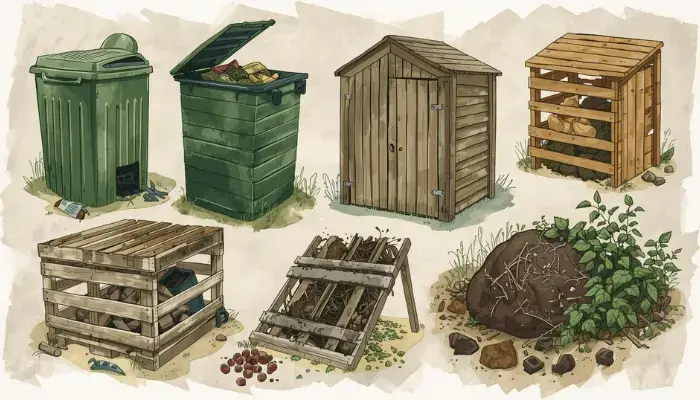
Most UK gardeners use a compost bin because it keeps things tidy and speeds up decomposition.
Popular options include:
- Plastic compost bins (often sold by local councils)
- Wooden compost bins
- DIY pallet compost bins
- Simple compost heaps
Place your compost bin:
- On bare soil (not concrete)
- In partial shade
- In a well-drained area
Bare soil allows worms and microorganisms to enter and help break down the materials.
Step 2: Start with a Base Layer
Begin your compost heap with a layer of coarse material.
Good options include:
- Small twigs
- Straw
- Wood chips
This helps air circulate, which is important for decomposition.
Aim for about 10–15 cm (4–6 inches).
Step 3: Add Green and Brown Materials
The key to good compost is layering greens and browns.
A simple rule is:
2 parts brown materials to 1 part green materials
Example layer:
- Dry leaves
- Vegetable scraps
- Shredded cardboard
- Grass clippings
Mixing materials slightly helps speed up the process.
Step 4: Keep the Compost Moist
Your compost should feel like a wrung-out sponge.
Too dry → decomposition slows down.
Too wet → compost becomes smelly.
If it looks dry: Add water with a watering can.
If it looks soggy: Add cardboard or dry leaves.
Step 5: Turn the Compost Occasionally
Turning the compost adds oxygen, which speeds up decomposition.
Use a garden fork to turn it:
- Every 2–4 weeks, if possible.
This helps:
- Mix materials
- Prevent bad smells
- Speed up composting
However, compost will still form even if you turn it less often.
Step 6: Wait for Nature to Do the Work
Depending on conditions, compost can take:
- 3–6 months in summer
- 6–12 months in cooler UK weather
Your compost is ready when it becomes:
- Dark brown
- Crumbly
- Earthy smelling
- No longer recognisable as food scraps
At that stage, it’s ready to use in the garden.
Practical Composting Tips from Experience
- Over the years, many UK gardeners learn a few helpful tricks.
- Chop materials smaller
- Cutting waste into smaller pieces helps it break down faster.
- Add cardboard regularly
- Shredded cardboard is excellent for balancing wet kitchen waste.
- Cover food waste
- Always bury kitchen scraps under brown materials to keep flies away.
- Avoid compacting the pile.
- Too much pressure removes air, slowing composting.
- Keep a kitchen compost caddy.
- This makes collecting vegetable scraps much easier.
Common Beginner Composting Mistakes
- Adding too many grass clippings
Fresh grass can become slimy and smelly. Always mix it with dry materials. - Not enough browns
Kitchen scraps alone create wet compost. - Add:
Cardboard
Paper
Leaves
Adding the wrong foods - Avoid:
Meat
Fish
Dairy
Cooked food
These attract pests. - Compost pile too dry
If your compost isn’t breaking down, it may need water. - Compost bin in full sun
This can dry the pile too quickly in summer.
Partial shade works best.
What NOT to Put in Compost
Some materials should never go in a home compost bin.
Avoid adding:
- Meat or fish
- Dairy products
- Cooked food
- Diseased plants
- Pet waste
- Glossy magazines
- Plastic or synthetic materials
These can cause pests, smells, or contamination.
UK Seasonal Composting Advice
The UK climate affects how quickly compost breaks down.
Spring
Spring is a great time to start composting.
Add:
- Garden prunings
- Early grass cuttings
- Vegetable scraps
Turn the compost to wake it up after winter.
Summer
Composting is fastest in warm weather.
Tips:
- Turn compost regularly
- Water if dry
- Add grass clippings carefully
You may produce usable compost within a few months.
Autumn
- Autumn is composting gold.
- Fallen leaves are perfect brown material.
- You can create leaf mould, which improves soil structure.
Winter
Composting slows down during colder UK months.
Continue adding:
- Kitchen scraps
- Cardboard
- Tea bags
Decomposition will resume in spring.
How to Use Finished Compost in the Garden
- Once ready, compost can be used in many ways.
- Improve garden beds
- Spread 5–10 cm of compost over the soil and dig it in.
- Mulch around plants
- Helps retain moisture and suppresses weeds.
- Mix into potting soil.
- Blend compost with garden soil for containers.
Feed vegetables
Great for:
- Tomatoes
- Courgettes
- Pumpkins
- Potatoes
Compost provides slow-release nutrients.
Final Thoughts
earning how to make compost at home in the UK is one of the best skills any beginner gardener can develop. It turns everyday waste into a powerful soil improver that helps plants grow healthier and stronger.
Start simple. Add kitchen scraps, garden waste, and dry materials, keep the compost slightly moist, and let nature do the rest.
Before long, you’ll have rich, homemade compost ready to feed your garden — and you’ll wonder why you didn’t start sooner.
Happy composting!
FAQ
How long does compost take to make in the UK?
Typically 6–12 months, depending on temperature, materials, and how often you turn the pile.
Do compost bins attract rats?
They usually don’t if you avoid adding:
Meat
Cooked food
Dairy
Keep the lid closed and cover kitchen scraps with brown materials.
Can I compost tea bags in the UK?
Many tea bags are compostable, but some contain plastic. Check the packaging before adding them.
Do I need a compost bin?
No. You can make a simple compost heap, but bins are tidier and often compost faster.
Can I compost citrus peels?
Yes, in small amounts. Too much citrus can slightly slow decomposition.